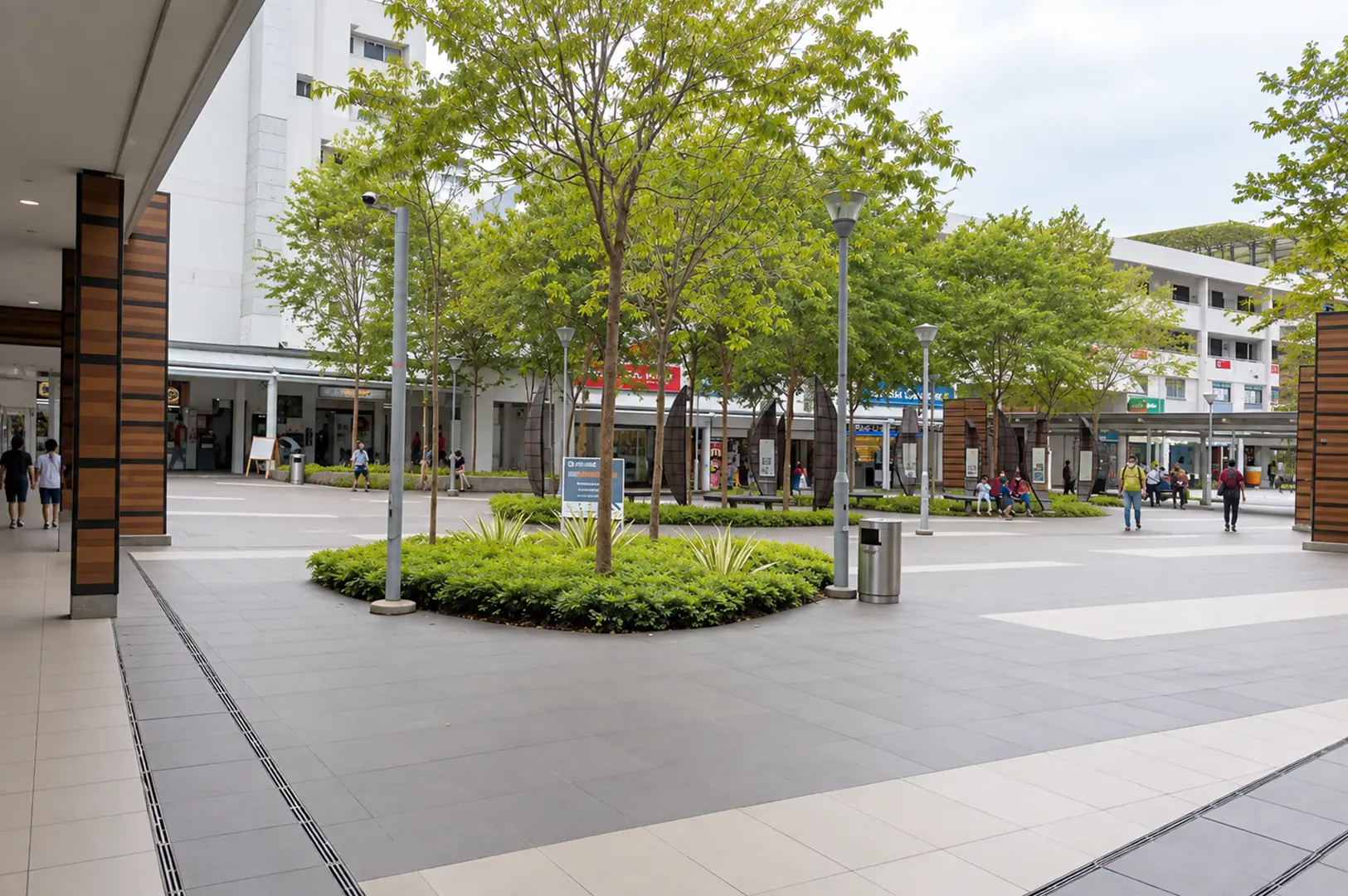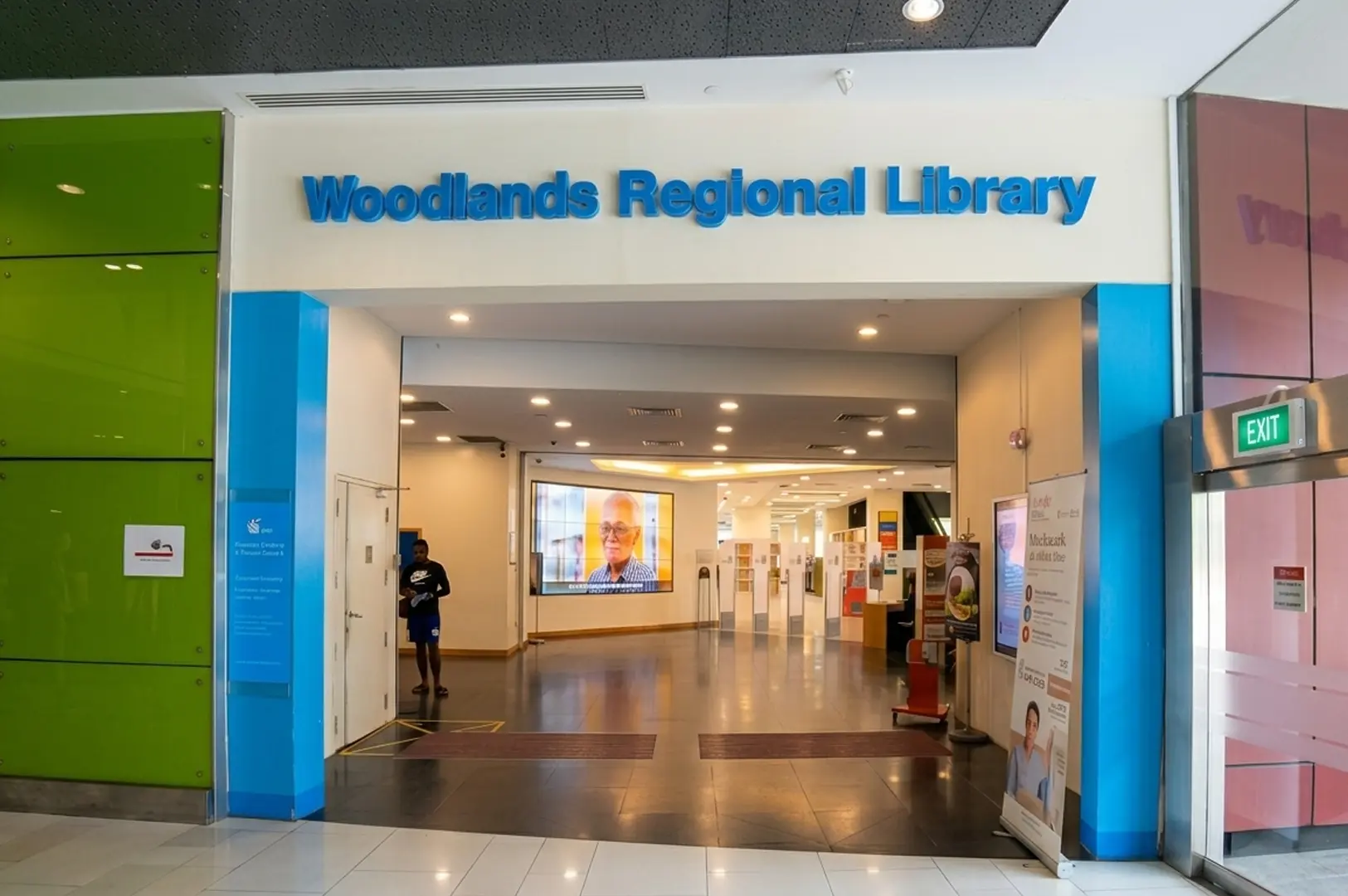
The Woodlands Regional Library does not announce itself loudly. It stands with composure—glass, concrete, and light held in careful balance. From the outside, it feels grounded. From within, it opens upward, outward, breathing with the neighbourhood around it.
I step inside and notice the shift immediately. The air cools. Sound softens. Footsteps slow. This is not just a place for books—it is a structure designed for thinking, for lingering, for letting time stretch a little longer than usual.
Architecture That Listens
Built in the early 2000s as Singapore’s first regional library, Woodlands Regional Library is designed around flow. Not rush, not silence—but movement that feels intentional.
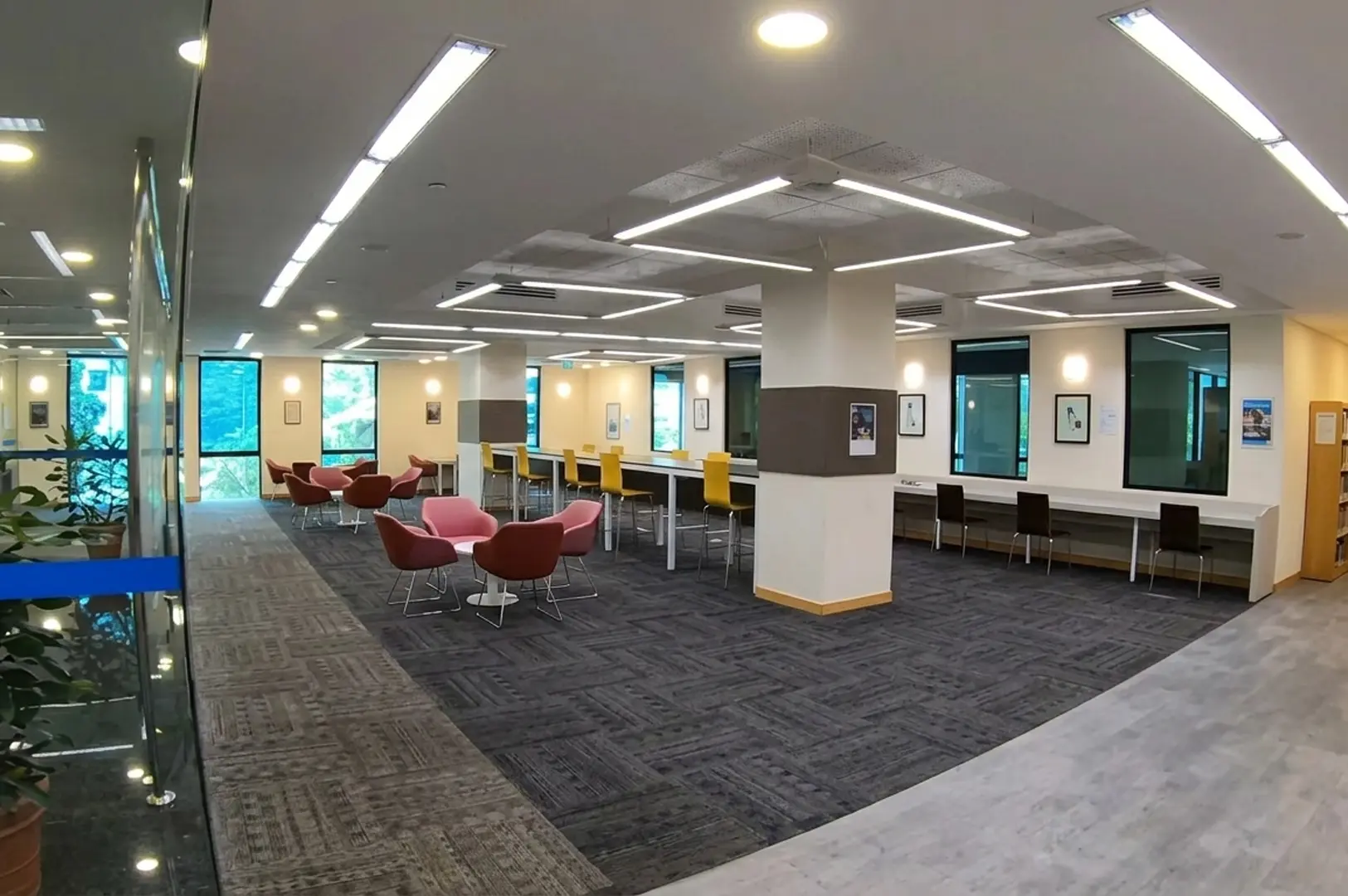
A central atrium draws daylight deep into the building, letting it spill gently across reading tables and staircases. Floors stack like terraces, each level revealing partial glimpses of the next—knowledge layered, not hidden.
What stands out is restraint. Nothing overwhelms.
- Natural light filters through wide windows
- Open sightlines encourage wandering rather than confinement
- Quiet corners coexist with communal spaces
The building does not compete for attention. It supports it.
A Space Shaped by Use
This library understands its users.
Students settle into desks with practiced familiarity. Elderly readers rest near windows, pages turning slowly. Children drift toward colour and movement, guided by low shelves and softened edges.
The materials matter here. Wood tones warm the interior. Surfaces absorb sound. Even the escalators seem to move with care, carrying people upward without urgency.
The architecture adapts, without announcing its intelligence.
The Knowledge Centre Within
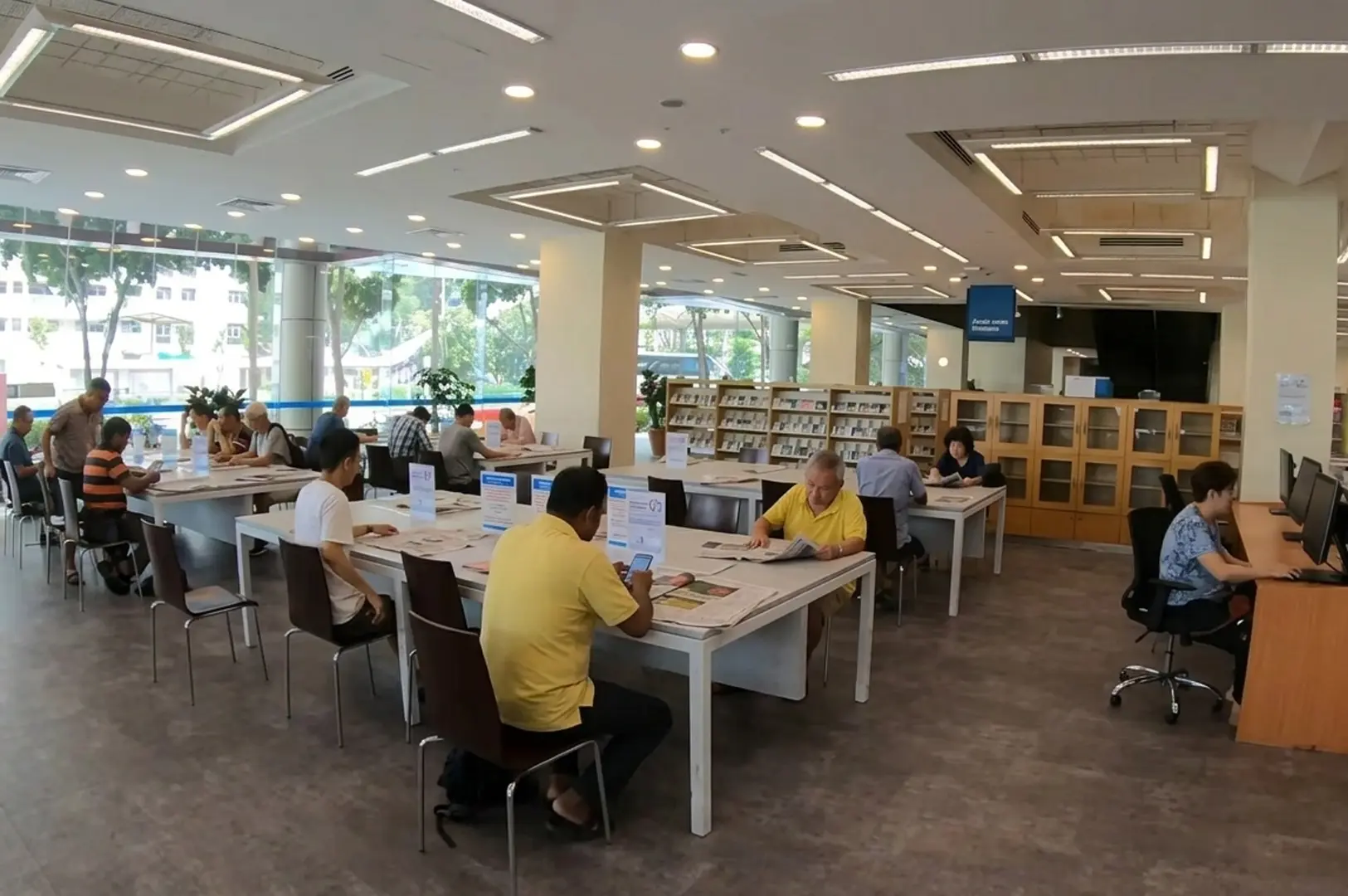
As a Knowledge Centre, the library extends beyond books. It houses archives, multimedia resources, and community programmes—but none of this feels technical or heavy.
Instead, the building frames learning as something lived-in.
Information feels accessible, not stored away. Ideas feel in motion, passing quietly from shelf to reader, from screen to notebook, from one generation to another.
This is architecture as infrastructure for curiosity.
Why It Belongs to Woodlands
Woodlands is a neighbourhood of thresholds—between countries, between movement and pause. The library mirrors this identity. It is a place where transit slows into reflection.
Stand by the windows and watch the light shift. Listen to pages turning, keyboards tapping, chairs sliding back softly. The building holds these sounds like a memory.
Come not just to read, but to observe how space shapes thought. Stay long enough to feel the rhythm settle.
Some buildings speak loudly.
This one whispers—and is heard.
Every neighbourhood leaves traces. Some stay with you longer than expected. If you’re ready to keep noticing—the light, the spaces between, the everyday poetry—you’ll find more moments like this with Neighbourhood Photographers. Click here and continue the walk.