Tiong Bahru does not walk in straight lines.
It curves.
Around balconies, under five-foot ways, past old staircases, through quiet alleys where the morning light lands softly on painted walls. This neighbourhood feels like a folded postcard from another Singapore, still warm from someone’s pocket. You arrive for the cafés in Tiong Bahru, perhaps. But stay a little longer and the buildings begin to speak.
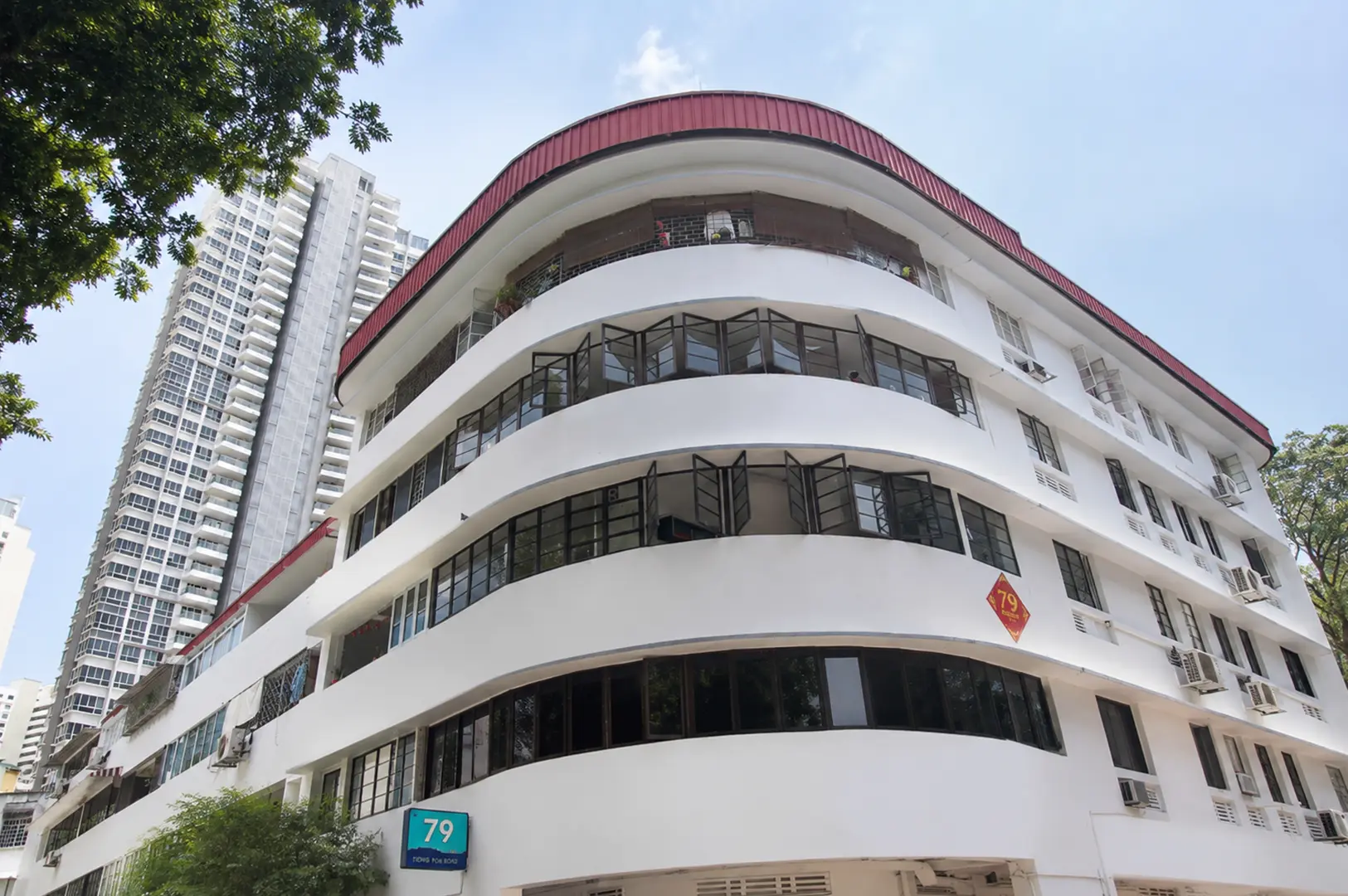
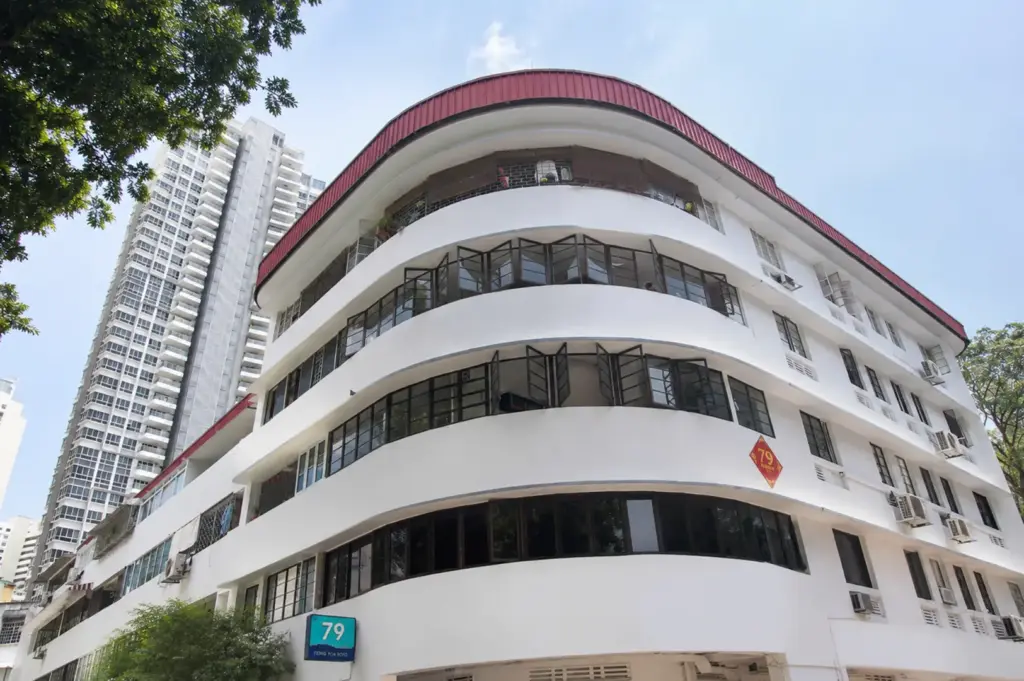
Tiong Bahru’s architecture carries a rare rhythm. In the late 1930s, the Singapore Improvement Trust shaped the estate with pre-war flats designed by Alfred G. Church. Their style is often linked to Streamline Moderne, a late branch of Art Deco inspired by movement, speed, ocean liners, trains, and machines. You can see it in the smooth corners, long horizontal lines, rounded balconies, and low, confident blocks. Nothing shouts. Everything glides.
Where Buildings Remember
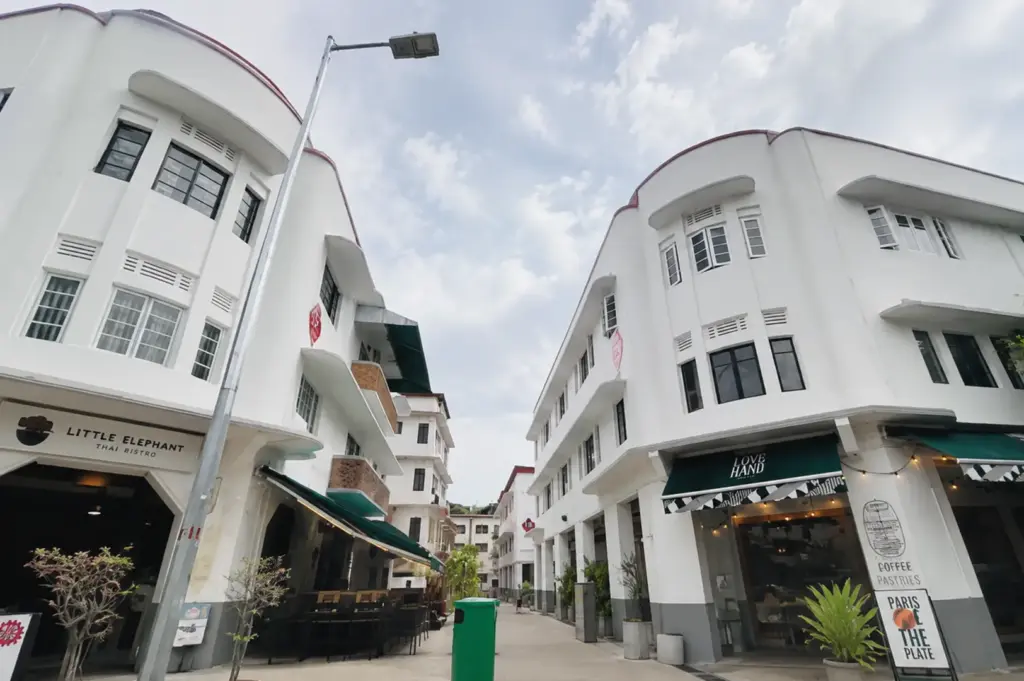
Walk along Seng Poh Road, Tiong Poh Road, Eng Hoon Street, and Moh Guan Terrace, and the estate opens like a quiet sketchbook. White walls catch the sun. Green window frames blink in the heat. Staircases sit tucked at the back, intimate and practical, like secrets the buildings keep for residents.
These flats were not built to impress from a distance. They were made for daily life: shops below, homes above, corridors, courtyards, shaded edges, and pockets of breeze. In 2003, 20 blocks of Tiong Bahru flats were granted conservation status, a reminder that architecture can be both ordinary and precious at the same time.
Then the alleys begin.
Behind the polished café fronts, Tiong Bahru becomes more tender. Laundry hangs like small flags. Cats nap beneath parked bicycles. Old tiles glow after rain. The walls hold murals by local artist Yip Yew Chong, whose nostalgic scenes turn blank surfaces into memory: kampung mornings, provision shops, uncles, aunties, birds, and stories that feel almost close enough to touch.
Here, art does not feel separate from the neighbourhood. It leans into the architecture. A mural beside an old wall. A shadow beside a staircase. A window beside a painted face. The whole walk becomes a conversation between surface and soul.
Tiong Bahru’s name means “new cemetery,” a reminder of the area’s older landscape before housing, cafés, and curated shopfronts arrived. That history gives the neighbourhood its deeper tone. Beneath the brunch chatter and bookshop quiet, there is earth, memory, and reinvention.
This is why a Tiong Bahru architecture walk feels so layered. It is not just about pretty buildings. It is about how a neighbourhood keeps changing while still holding its shape. The old flats remain. The alleys breathe. The art keeps watch.
Come in the softer hours if you can: morning, when the walls are pale with light, or late afternoon, when shadows stretch across the curves. Bring a camera, but also bring patience. Tiong Bahru rewards the slow glance.
For more architectural stories, neighbourhood walks, and Singapore places told through texture and memory, visit Neighbourhood Photographers by clicking here: https://neighbourhoodphotographer.com/.